
When Leaders Become the Bottleneck
A story about interruptions, planning, and how ignoring process can drain a team’s energy and focus.
Published on ·
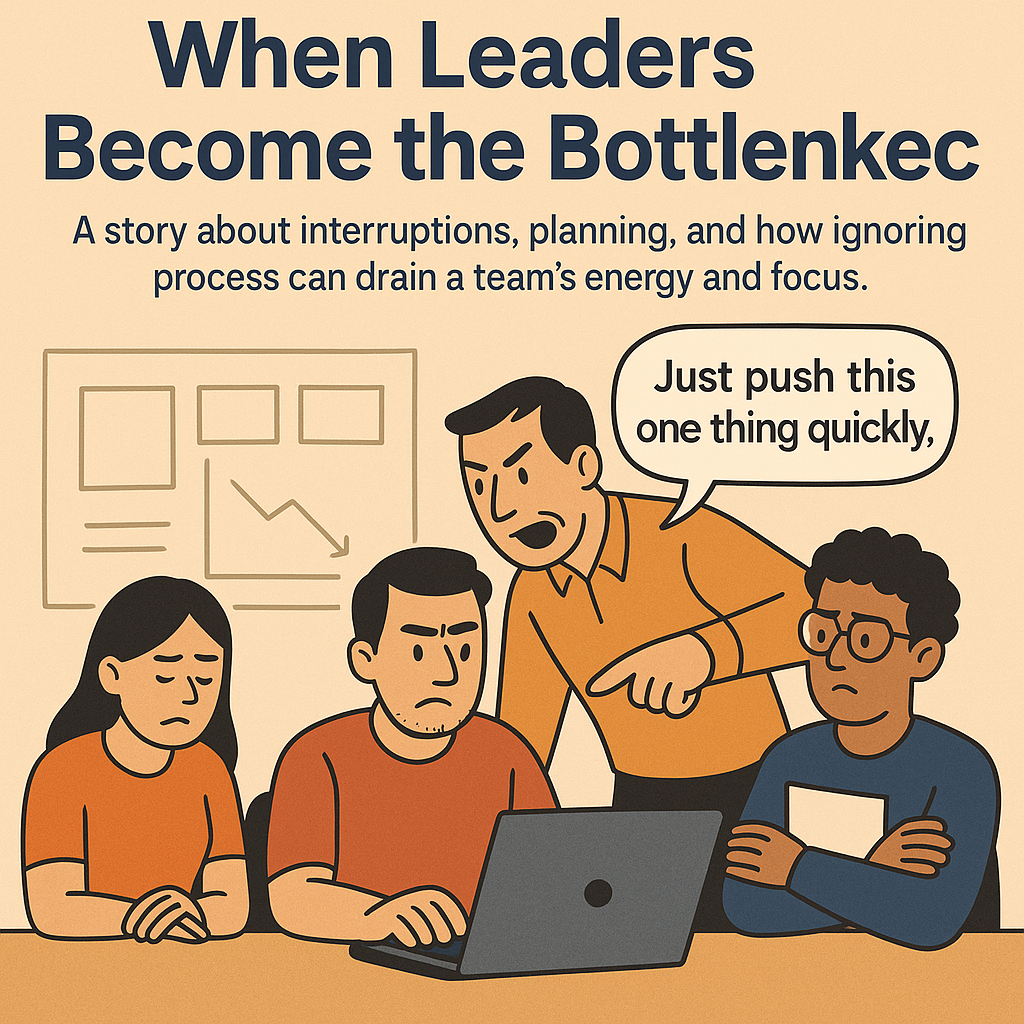
Situation
We were in the middle of an important sprint — one of those make-or-break cycles where the entire tech team was deep in flow. Every task was mapped, dependencies were clear, and everyone knew their part. Then it started happening: my manager would suddenly appear, message, or call — not once, but repeatedly.
“Haji, what happened to that feature?” “This task should take two minutes.” “Just push this one thing quickly.”
Each time, the context-switching broke momentum. Each “quick fix” turned into half a day of rework, testing, or debugging. And each interruption delayed the actual roadmap work — the same one we were being held accountable for.
Task
As the Product Marketing Manager, my role was to keep alignment — ensure the roadmap stayed on track while managing expectations upward. I needed to protect the team’s focus, communicate priorities clearly, and make sure leadership understood the cost of every “quick request.”
Action
I started documenting every unplanned task that came from leadership. For each request, I logged when it arrived, who made it, and what it impacted. Within two weeks, the list was long — over 12 unplanned requests, each one disrupting multiple people.
Then, instead of confronting emotionally, I presented data: how many sprint items were delayed, how much tech debt was created, and how the team’s cycle time had doubled. I also proposed a simple solution — a “Focus Zone”: a protected block during the day when no one interrupts engineers unless it’s critical.
Result
Once the data was visible, the conversation shifted. The same manager who once said, “It’s a two-minute job,” realized the real cost: context-switching, burnout, and accumulated tech debt. Within a month, we had better boundaries, fewer interruptions, and higher-quality output. But most importantly, the team felt respected again.
“A leader’s job isn’t to move faster than the team — it’s to clear the path so the team can move without interruption.”
The Lesson
Great leadership isn’t about constant motion — it’s about discipline. Respect for planning and process is respect for people. When leaders interrupt flow, they don’t accelerate progress — they sabotage it.
Lesson in one line: Protecting focus isn’t optional — it’s the foundation of quality, trust, and long-term speed.